BASED ON ACTUAL EVENTS. AND TERRIBLE DECISIONS.
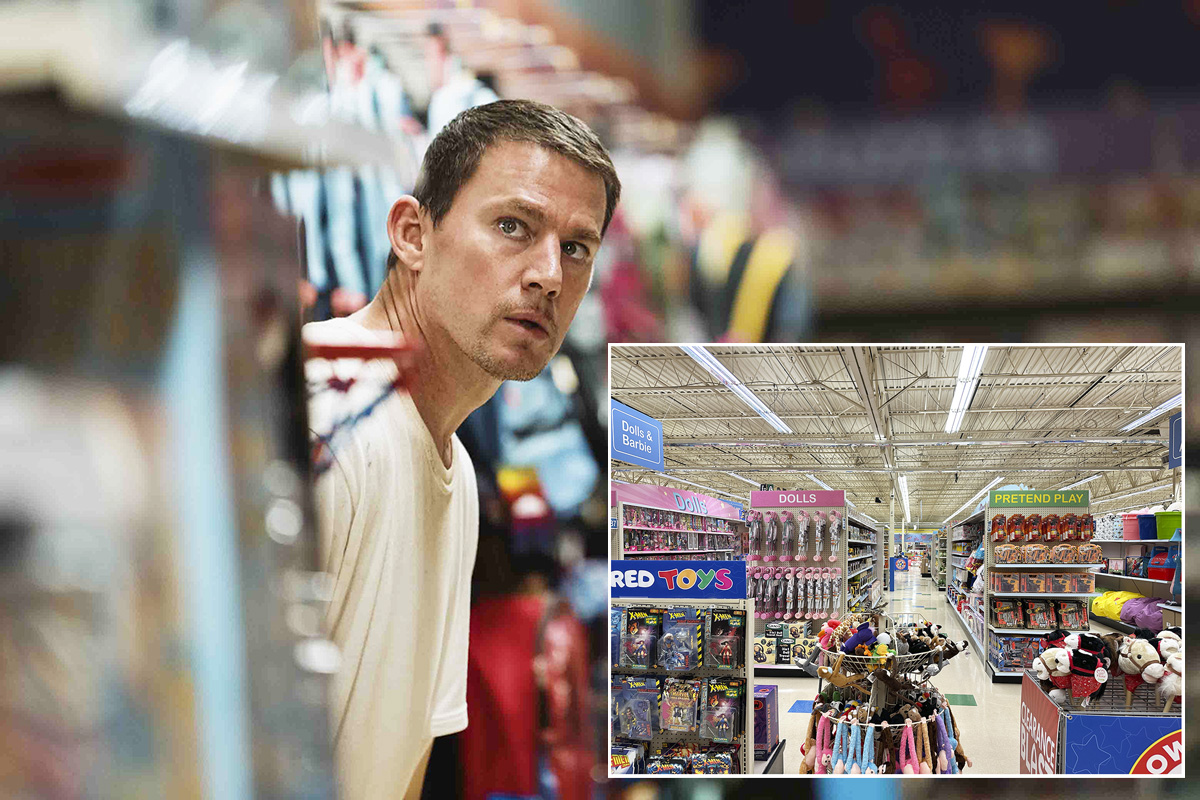
Based on an unbelievable, true story, ROOFMAN follows Jeffrey Manchester [Channing Tatum], an Army Ranger veteran and struggling father who turns to robbing McDonald's restaurants by cutting holes in their roofs, earning him the nickname, Roofman. After escaping prison, he secretly lives inside a Toys R Us for six months, surviving undetected while planning his next move, but when he falls for Leigh [Kirsten Dunst], a divorced mom drawn to his undeniable charm, his double life begins to unravel, setting off a compelling and suspenseful game of cat and mouse as his past closes in. – Paramount Pictures
Wisely, Director Derek Cianfrance brought together his core team, including Production Designer Inbal Weinberg, who brought with her, Set Decorator Kendall Anderson SDSA, who had worked as the NY Set Decorator with Inbal on Almodóvar’s lauded THE ROOM NEXT DOOR.
We caught up with Kendall for a quick look at a phenomenal set from ROOFMAN, the enormous store that would be instantly recognizable, although the story takes place more than 20 years ago.
SETDECOR: A question that often comes up is “What was your biggest challenge on this production?” Obviously, for this film, it would be the 2004 TOYS R US store, all 20,000+ square feet! Please tell us of the challenges of creating different aspects of it...
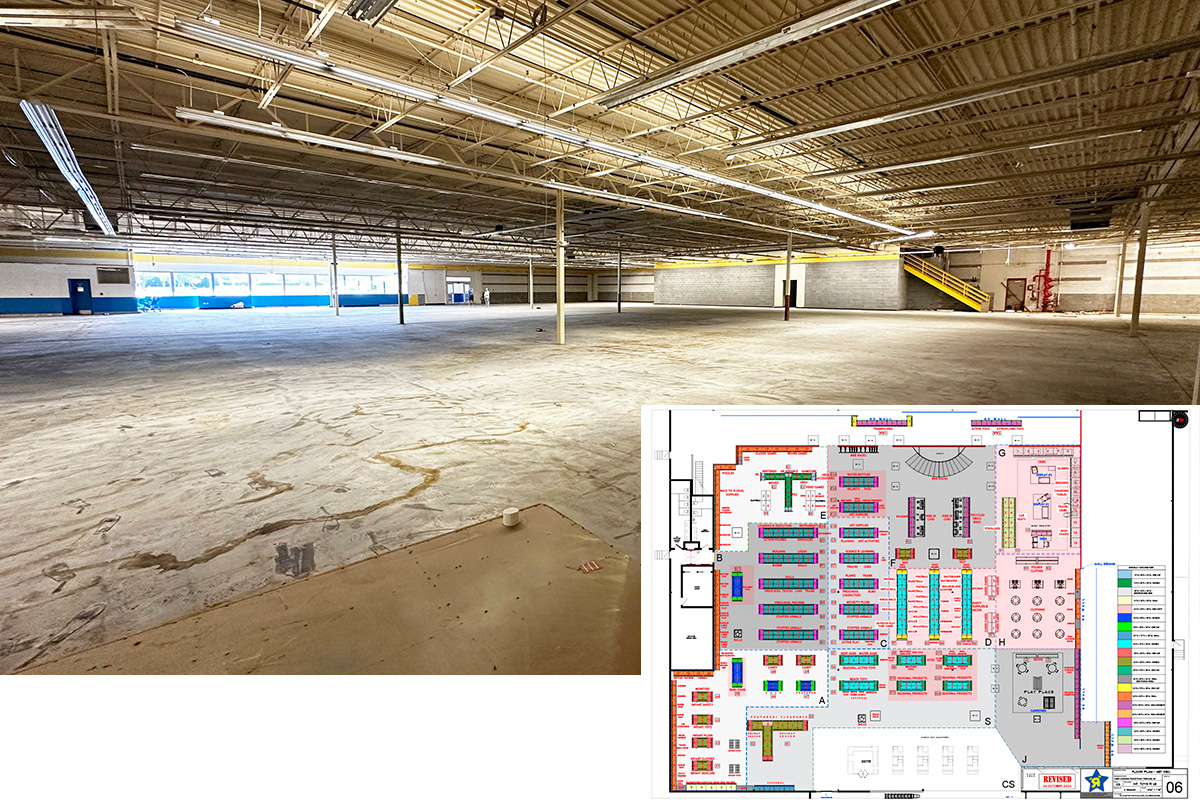
TOYS-R-US: Before + Map of store for placement. Images courtesy of Paramount Pictures
Set Decorator Kendall Anderson SDSA: “The initial step of the process was super challenging...designing the overall layout of the store. We had a ton of research, so we knew how most of the TOYS-R-US sections were laid out, but then we had to tailor that to our story and Jeff’s movements and actions within the store.”
“Plus, I had to determine which sections I could feasibly populate in our time and budget. For example, having 2 aisles of period-correct Barbies wasn’t possible, but things like balls and stuffed animals, or sports equipment, are more timeless and achievable.”
“I spent weeks figuring out what products went where, so we could design an inventory system. We used an actual inventory system via AirTable and actual barcodes in order to populate the aisles and designate where the items went in the store. A barcode would tell the set dressers exactly which aisle and section the item belonged in.”
“I’m pretty sure this is a photo I took on the day we opened the set. I was up in the security box, and the light was so perfect it was a moment where I could really see from a birds eye view the work we put in and how real it looked when all complete.” Courtesy of Paramount Pictures. All Rights Reserved.
SD: One doesn’t think of this as “vintage” but the setting in 2004 means the story takes place over 20 years ago! Were there contemporary items you had to avoid?
Toys from the 20th Century to include?
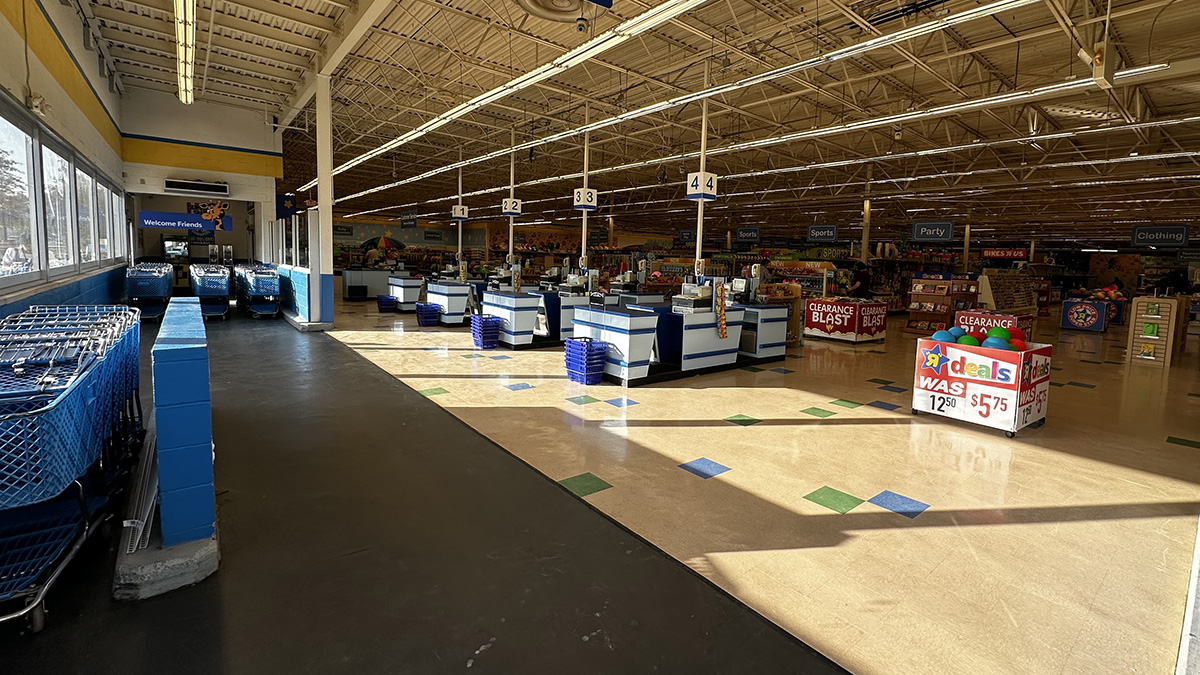
“Luckily, there are a lot of items we were able to use that are timeless...but, yes, much of it was very period. We needed VHS tapes and older computer systems for our check-out lanes, which we completely built custom. The only things available from previous stores were the shopping carts which we definitely used!”
The custom-built ‘vintage’ checkout registers and consoles, and the inherited actual shopping carts. All films that are re-creations of an actual true-life story hope for that perfect amalgamation of representation and real combination. Courtesy of Paramount Pictures. All Rights Reserved.
“We had to be careful with how common items had changed. We took a 3-way approach. First, we fabricated some of our own generic items - these were larger boxes of toys like trucks and dinosaurs for example. We worked with a packaging company that would create the boxes for our designs, and we used these large boxes to populate much of the bottom layer of shelves.”
Toys especially allow the magic of graphics and size...and human creativity. Courtesy of Paramount Pictures. All Rights Reserved.
“Secondly, we purchased real product from eBay, scanned boxes and had the same packaging company fabricate the boxes, which then our set dressers would assemble. We did this with board games of the time, Play-Doh, etc.”
“And finally we purchased the timeless products in bulk - baby toys, stuffed animals, bouncy balls, sports equipment etc. I purchased a lot through wholesalers that have some more dated packaging to maintain the vintage look for these items.”
“It was important for our Director, Derek Cianfrance, that Channing could just do his thing in the store, in a real space, and not be confined to little corners, the entire thing had to be real and complete.”
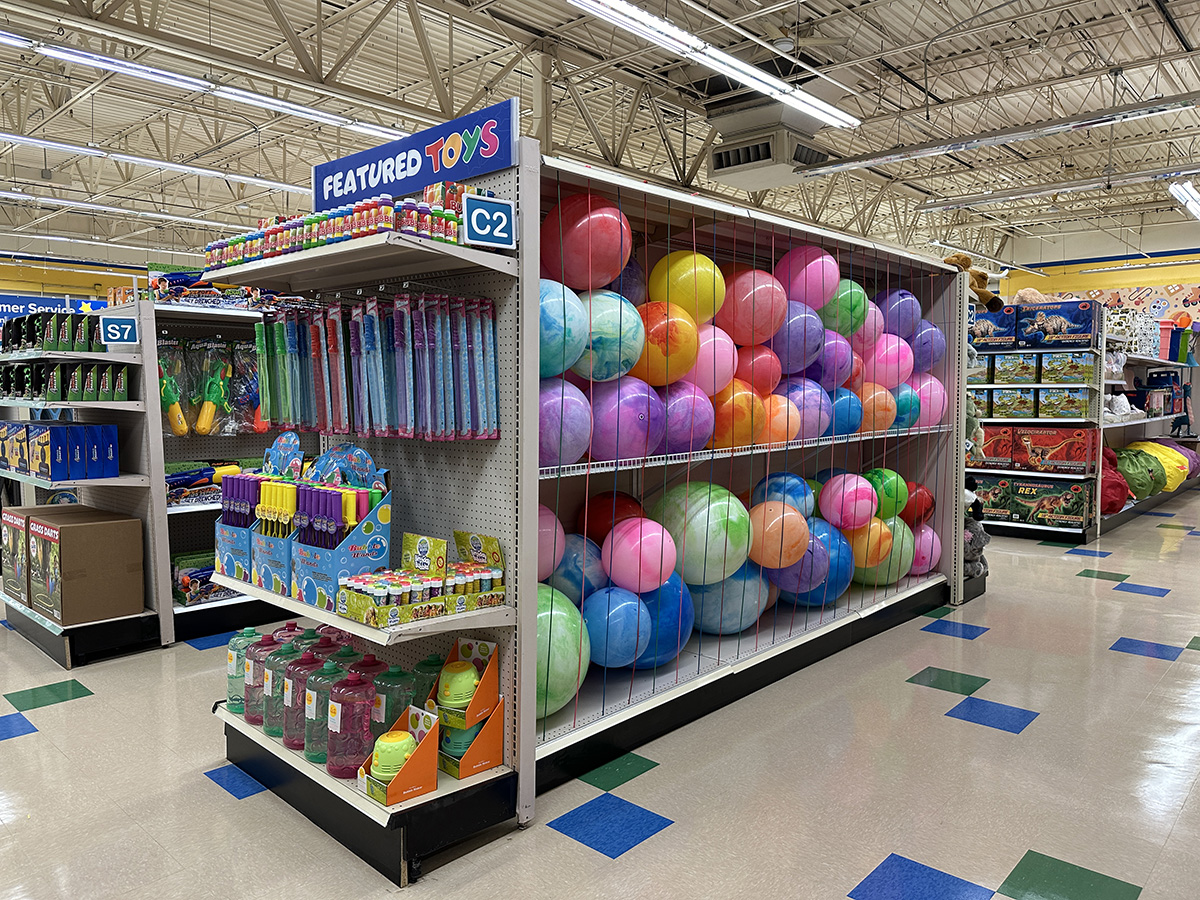
“I had a lot of fun trying to think how to contain all the balls, and one of my set dressers helped the vision come to life with some colored bungee cord. Crew was constantly playing with and throwing these bouncy balls around the set.” Courtesy of Paramount Pictures. All Rights Reserved.
Tell us about sourcing, product placement, clearances, etc [Barbie, XMen, Mattel, etc]
“Production, luckily, took the approach with clearances that it was all fair use. Since we were creating a real store during a specific time and populating it with real products from the time it was all fair game. We simply did not have enough resources or time to do it any other way. Obviously, we were requested not to linger on something specific but in its context of so much product we could safely use real product and get away with it.”
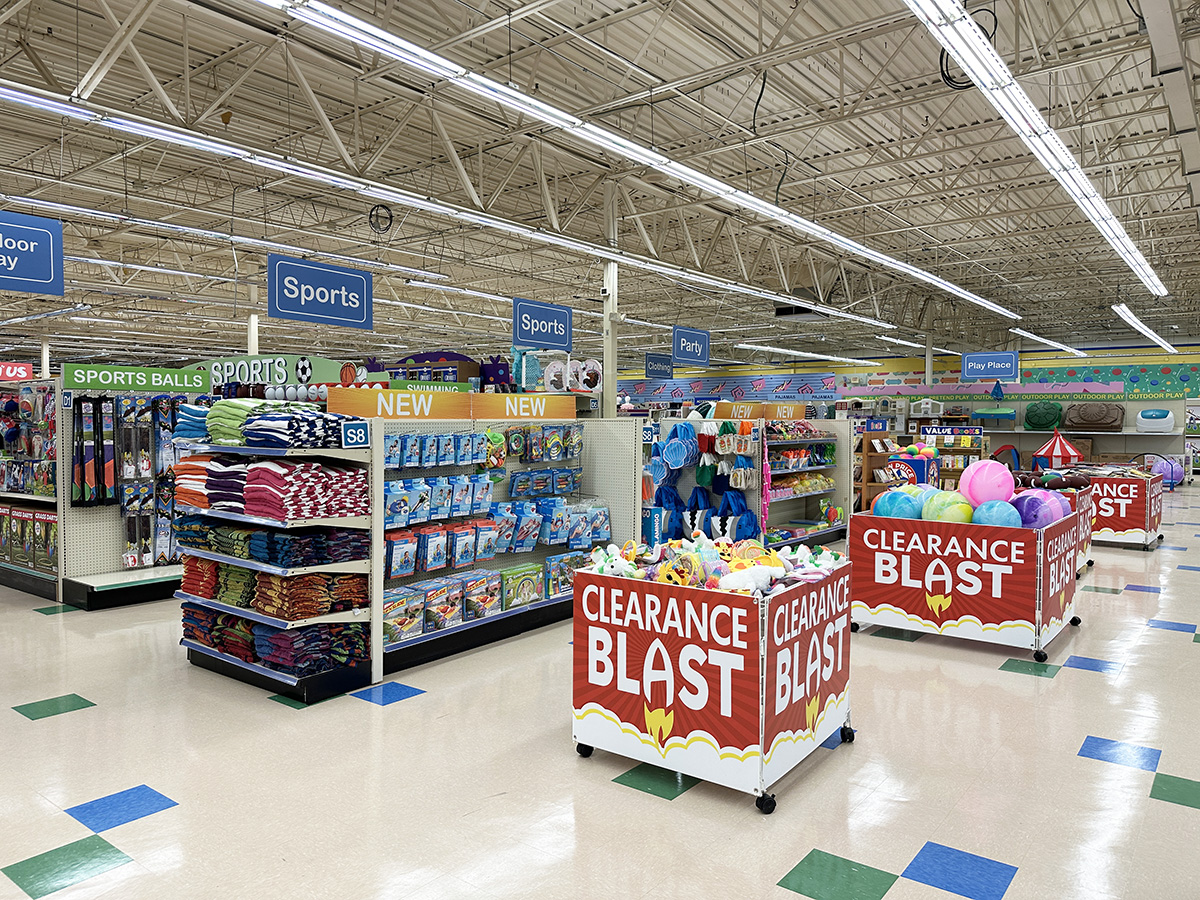
“The bins with clearance signs on them were a staple in TOYS-R-US stores and a great way for us to fill up space or move around as needed.” Courtesy of Paramount Pictures. All Rights Reserved.
Not everyone would remember the infant world within the toy store, tell us about creating those spaces…
“This is one of the first areas I was able to populate. It mainly stemmed from the initial partnership we started with Baby2Baby. Through their connection, we reached out to brands about products for the store. Several companies gifted us product that we then donated to Baby2Baby and also back to the community. In fact, everything in the store was donated in the end to children in need in the Charlotte area.”
The pros and cons on filming this project on location, literally? Access, research, resources...
“Filming in the town where the actual events took place was such a treat! The whole saga had a strong effect on the people that lived in Charlotte during the time. Derek also had access to real people involved in the incident, like the truck driver from the prison was the real driver, he consulted with the real Leigh and the Pastor. It really helped our telling of the story feel real and genuine.”
“And I had an amazing local crew, including Jessica Segal as my local assistant. My set dressing team was mostly all from Savannah, they were such a tight knit group that worked so well together. We purchased an entire closed-down grocery store’s shelving, which we disassembled, cleaned and reassembled in our store, and then supplemented with more(!) from a local ‘used’ gondola shelving store.”
“This was probably the most physically demanding part of the job, as it was in August in a heat wave in North Carolina with no AC! But, in the end, even though the job was super challenging, we all had so much fun! The times putting the store together were filled with some serious physical labor setting up the shelving units and gondolas...and then, obviously, some joy and play putting all the toys out,” she smiles.